Most couples see their wedding videographer arrive in the morning and disappear into the background of their day. What they do not see is the constant choreography happening behind the scenes. From scouting lighting to repositioning cameras to monitoring audio to anticipating emotional moments before they happen, a wedding videographer is in motion almost every minute of the day. After more than a decade of filming weddings across Oregon and Washington, I want to pull back the curtain on what a wedding videographer actually does from sunrise to last dance, from Portland Event Films.
What Does a Wedding Videographer Do Before Arriving on Wedding Day?
A wedding day does not start when the videographer walks through the door. It starts days or weeks earlier. The preparation that happens behind the scenes is what makes the wedding day itself feel seamless.
How Does a Wedding Videographer Prepare in the Days Leading Up to the Wedding?
In the days before your wedding, a professional wedding videographer is doing the following.
- Reviewing the wedding timeline in detail
- Confirming vendor contact information for photographer, planner, DJ, and officiant
- Studying the venue layout from previous shoots, virtual tours, or planning consultations
- Charging batteries across multiple camera systems
- Checking and formatting memory cards
- Cleaning lenses, testing audio recorders, and verifying microphone pairings
- Packing primary gear and backup gear separately
- Reading any notes from the couple about specific moments to capture
This preparation is invisible to you on the wedding day, but it is the foundation of every clean shot, every working microphone, and every cinematic moment. Browse our video gallery to see how this kind of preparation translates into finished wedding films.
What Happens When the Wedding Videographer Arrives at the Venue?
Arrival is rarely calm. A wedding videographer is typically the first or second vendor on site after the planner, often arriving while you are still getting ready.
What Does a Videographer Do During the First Hour on Site?
- Scout the lighting in every room you will use
- Identify the best camera positions for each major moment
- Coordinate with the photographer about angles and shared coverage
- Test ceremony microphones before guests arrive
- Sync audio recorders with cameras
- Walk through the timeline with the planner or coordinator
- Get a sense of where natural light will fall later in the day
- Identify any unexpected challenges like glare, echo, or limited power
This first hour is when the foundation of your entire wedding film gets built. The decisions made here shape every minute of coverage that follows.
How Does a Wedding Videographer Cover Getting Ready Moments?
The getting ready portion of your wedding day is one of the most visually rich phases. It is also one of the most carefully composed segments of your final film.
What Does a Wedding Videographer Film During Getting Ready?
- Detail shots of the dress, shoes, rings, and accessories
- The wedding party laughing and helping each other
- Quiet moments between parents and their children
- The bride or groom reading letters from their partner
- Hair and makeup finishing touches
- The first time you see yourself fully dressed in the mirror
A skilled videographer balances close ups with wide environmental shots, capturing the energy of the morning without disrupting it. For couples who want this kind of intimate documentary feel, our wedding documentary film approach treats getting ready as the emotional foundation of the final film.
How Does a Videographer Stay Out of the Way?
Professional videographers move quietly, use longer lenses to stay back, and avoid blocking the photographer’s shots. The best work happens when couples almost forget the videographer is in the room.
What Does a Wedding Videographer Do During the First Look or Pre Ceremony?
Whether you choose a first look or wait until the aisle, this part of the day requires intense focus from your videographer.
How Does a Videographer Cover a First Look?
If you are doing a first look, your videographer positions two cameras strategically before the moment happens. One camera captures the wide shot showing both partners. The other captures close up reactions. Audio recorders are running with lavalier microphones if private vows are involved.
A great first look is not just about being there. It is about being ready before the moment unfolds. The best reactions only happen once.
What If You Skip the First Look?
If you skip the first look, your videographer uses this window to film additional details, family portrait setups, or pre ceremony scenic shots. Nothing on a wedding day goes to waste.
How Does a Wedding Videographer Cover the Ceremony?
The ceremony is the most important segment of the entire wedding day. It is also the most technically demanding for a videographer.
What Camera Setup Does a Videographer Use During the Ceremony?
Professional wedding videographers typically use multiple cameras during the ceremony.
- A wide locked off shot capturing the full ceremony space
- A close up angle focused on the couple’s faces
- A reaction angle catching guest emotions
- A roaming camera moving subtly for creative angles
Each camera has a purpose. Together they ensure no critical moment is missed.
How Does a Videographer Handle Ceremony Audio?
Clean ceremony audio requires multiple sources. Lavalier microphones on the officiant and one of the couple. A direct feed from the DJ or sound system if available. Backup audio recorders running in parallel. All of this is set up before guests arrive, monitored throughout the ceremony, and managed quietly without disrupting anything.
What Else Is Happening Behind the Camera During the Ceremony?
Beyond pointing and recording, a wedding videographer is mentally tracking the timeline. Anticipating the ring exchange. Adjusting exposure as the sun shifts. Watching for unexpected guest reactions. Communicating with the photographer through silent eye contact about who is covering which angle. Every minute of the ceremony requires constant active thinking.
What Does a Wedding Videographer Do During Cocktail Hour?
Cocktail hour is one of the busiest periods for a videographer behind the scenes.
What Is the Videographer Doing While Guests Mingle?
- Filming candid guest interactions and reactions
- Capturing detail shots of the reception setup before guests enter
- Filming couple portraits alongside the photographer
- Resetting batteries, swapping memory cards, and prepping for reception
- Reviewing footage briefly to confirm key ceremony moments captured cleanly
- Eating quickly if a vendor meal is offered
Cocktail hour rarely feels like a break. It is a transition period filled with detail work that supports the next phase of coverage.
How Does the Videographer Coordinate With Other Vendors at This Stage?
This is also when your videographer typically checks in with the DJ about reception timeline cues, microphone setups, and any timeline changes that have already shifted from the morning. For couples whose loved ones are joining the wedding remotely, our wedding live streaming service requires especially close vendor coordination during this transition.
How Does a Wedding Videographer Cover the Reception?
Receptions are where energy peaks and the videographer’s work shifts from quiet observation to dynamic movement.
What Does a Videographer Film at the Reception?
- The grand entrance with full energy and audio capture
- Toasts and speeches with microphones and reaction shots
- First dance and parent dances with cinematic coverage
- Cake cutting and reception traditions
- Candid dance floor moments
- Quiet moments between you and your partner that happen between scheduled events
How Does a Videographer Handle Reception Lighting Challenges?
Receptions are typically dim, dramatic, or lit with colored LEDs. Skilled videographers use cameras with strong low light performance, sometimes supplement with portable on camera lights, and adjust their exposure constantly as the room shifts. For couples planning intimate evening celebrations, our elopement videography service applies the same lighting expertise to smaller venues.
What Happens Behind the Scenes During Speeches?
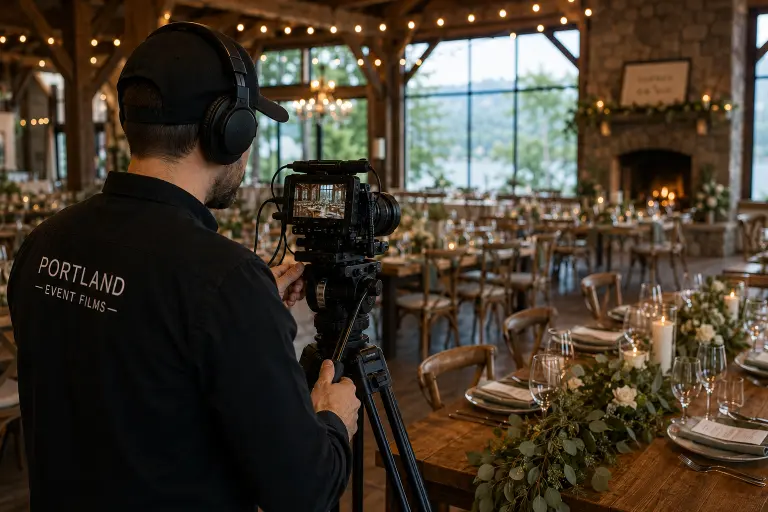
During speeches, the videographer is doing several things simultaneously. Recording clean audio from the soundboard feed and lavalier microphones. Capturing the speaker from one camera angle. Capturing the couple’s reactions from another. Anticipating when the speech will end so the transition cut feels natural. All while staying invisible to guests.
What Happens After the Send Off?
The reception ends, but a wedding videographer’s day is not quite finished.
What Does a Wedding Videographer Do at the End of the Night?
- Capture the grand exit or sparkler send off if included
- Film the empty reception space if a sweetheart last dance is scheduled
- Pack equipment carefully and confirm all memory cards are accounted for
- Briefly thank the couple, the planner, and other vendors
- Load equipment back into the vehicle
- Travel home, often at midnight or later
The drive home is when many videographers mentally review the day. Did anything go wrong? Did the audio sound clean during the vows? Are there any moments to be aware of during editing? This reflection happens before the gear is even unpacked.
What Does a Wedding Videographer Do After the Wedding Day?
The wedding day is just the start. Editing is where the wedding film actually takes shape.
What Does Post Production Look Like?
- Backing up all footage to multiple drives within twenty four hours
- Organizing footage by camera and by moment
- Syncing audio from recorders with camera footage
- Color grading every shot for consistency
- Selecting the strongest moments for the highlight film
- Editing the full ceremony with multi camera coverage
- Editing speeches, first dances, and key reception moments
- Selecting and licensing music
- Multiple rounds of review and refinement
- Final export, color check, and delivery
Most wedding films take six to twelve weeks to edit because each stage requires careful attention. Browse our photo gallery for more examples of finished wedding work.
What Happens During Final Delivery?
The final film is delivered through digital download or USB, depending on your package. Many couples receive multiple cuts including a highlight film, a full ceremony edit, and sometimes a longer documentary cut. For multicultural celebrations, our Indian wedding videography team often delivers additional deliverables covering multi day events.
Why Trust Portland Event Films With Your Wedding Day?
After more than a decade of filming weddings across the Pacific Northwest, I can promise you this. The smoothest wedding films come from videographers who have done the invisible work long before the wedding day arrives. The packing, the planning, the venue research, the audio testing, the gear checks. All of it shapes the final film in ways couples never see but always feel.
At Portland Event Films, we approach every wedding day with the same intentionality, regardless of size, style, or venue. We arrive prepared, we move quietly, we anticipate moments before they happen, and we treat post production with the same care as the wedding day itself. That is what allows your final film to feel effortless rather than rushed.
A Wedding Videographer Is Working Even When You Cannot See Them
Most of what a wedding videographer does on your wedding day happens out of sight. Adjusting camera angles. Monitoring audio. Communicating silently with other vendors. Anticipating emotional moments. Repositioning between key transitions. By the time the day ends and the editing begins, your videographer has made hundreds of small decisions that shape how your wedding film will look and feel for the rest of your life. That is the work behind the work, and it is the reason professional wedding videography costs what it does. The best wedding films do not happen because a videographer was lucky. They happen because the videographer was prepared, present, and constantly thinking three steps ahead.
Book Portland Event Films for Your Wedding Day
If you want a wedding videography team that takes the entire day seriously from the moment we begin planning through the final delivery of your film, Portland Event Films is ready to help. We approach every wedding with intention, professionalism, and care, ensuring nothing important is missed and every moment is captured beautifully.
Ready to start planning your wedding film? Explore our wedding videography packages to find coverage that fits your day. Planning a smaller celebration? Visit our elopement videography page. Hosting a multicultural wedding? Discover our Indian wedding videography services. Want loved ones to share your day remotely? Check out our wedding live streaming options. Prefer a documentary feel? Learn about our wedding documentary film approach. See more of our work in the video gallery, then contact Portland Event Films today to start building your story.
Frequently Asked Questions
1.What does a wedding videographer do all day?
A wedding videographer prepares equipment, scouts the venue, films getting ready moments, captures the ceremony with multiple cameras, films cocktail hour and portraits, covers the reception, and packs gear at the end of the night. The work continues for weeks in post production.
2.How early does a wedding videographer arrive at the wedding?
Most wedding videographers arrive at least one to two hours before the first scheduled moment to scout, set up gear, test audio, and coordinate with other vendors.
3.Does the wedding videographer eat at the reception?
Most professional contracts include a vendor meal during the reception, eaten quickly during a quiet moment. This keeps your videographer alert and able to film all evening.
4.How many cameras does a wedding videographer use?
Most professional wedding videographers use two to four cameras during the ceremony and reception, providing wide shots, close ups, reaction angles, and roaming creative coverage.
5.Does the wedding videographer stay until the very end?
This depends on your package. Most coverage runs through the grand exit, send off, or sweetheart last dance. Some packages include only a specified number of hours.
6.How long does a wedding videographer work on the wedding day?
A typical full coverage wedding day runs ten to twelve hours of active filming, plus one to two hours of arrival prep and tear down at the end.
7.Does Portland Event Films offer full day wedding videography coverage?
Yes. We offer flexible packages ranging from focused ceremony coverage to full day documentary style coverage across Oregon and Washington.
Key Takeaways
- A wedding videographer’s work begins days before the wedding through preparation, packing, and timeline review.
- Arrival at the venue starts a critical first hour of scouting, audio testing, and vendor coordination.
- Getting ready coverage captures intimate moments while staying invisible to the couple.
- Ceremony coverage requires multiple cameras, multiple audio sources, and constant timeline awareness.
- Cocktail hour and reception periods involve active filming, vendor coordination, and constant gear management.
- Editing takes six to twelve weeks of careful work after the wedding day ends.
- Portland Event Films approaches every wedding day with full intentionality, ensuring nothing important is ever missed.