Your wedding ceremony is the heart of your wedding day. It is where two lives become one, where vows are spoken, and where the story of your marriage truly begins. Planning a meaningful, smooth, and beautifully captured ceremony takes intentional decisions, smart timing, and strong coordination between your vendors. Drawing from hundreds of weddings filmed across the Portland area, Portland Event Films shares a complete guide that blends practical planning with DJ, photographer, and videographer perspectives.
How Do You Start Planning Your Wedding Ceremony?
Before you dive into music selections, decor decisions, and seating charts, take a step back and define your ceremony vision. Your ceremony should feel like you, not like a template. Sit down with your partner and work through three foundational questions.
- What tone do you want? Classic, religious, modern, intimate, or theatrical?
- What elements matter most to you? Personal vows, readings, unique rituals, live music?
- What timing and flow do you envision for the moment itself?
A clear vision makes every vendor conversation easier and ensures your ceremony feels meaningful rather than rushed.
Why Should You Share Your Vision With Your Officiant Early?
Your officiant is the narrator of your ceremony. The earlier you share your vision, the better they can craft a cohesive script, weave in personal stories, and create a flow that reflects who you are as a couple. Browse our video gallery to see how different ceremony tones translate beautifully on film.
What Is the Proper Wedding Ceremony Order?
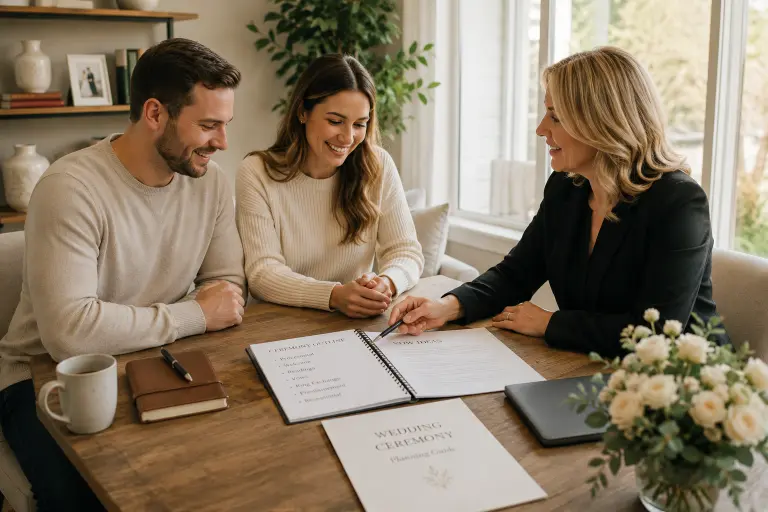
A classic ceremony structure usually follows a familiar sequence. While yours can be customized in countless ways, this is the foundation most ceremonies build on.
- Prelude and guest arrival
- Processional
- Welcome and opening words
- Readings or rituals
- Vows
- Ring exchange
- Pronouncement and first kiss
- Recessional
How Long Should Your Wedding Ceremony Last?
Non religious ceremonies typically run between twenty and twenty five minutes. Long enough to feel meaningful, short enough to keep your guests engaged. Religious or cultural ceremonies may run longer, especially when traditions span multiple rituals. Our Indian wedding videography team has filmed multi day cultural ceremonies that span hours, and we know how to preserve every meaningful moment.
Why Do Music Cues Matter for the Ceremony Timeline?
Coordinate carefully with your DJ or musician about when music should fade and when it should swell. Cueing for the processional, recessional, and interludes makes a noticeable difference in how your ceremony feels in person and how it translates to film.
How Do You Design the Best Guest Experience at Your Ceremony?
Seating layout influences nearly everything about your ceremony, including how well guests see the moment, how clearly audio reaches every seat, where photographers can position themselves, and where videographers can place cameras.
How Should You Arrange Wedding Ceremony Seating?
Arrange seating so no guest has a blocked view of the altar, walkway, or couple. Semi circle seating works beautifully for larger spaces because it brings everyone closer to the action. Staggered rows can also help guests in the back see clearly without straining.
Why Should You Leave Space for Vendors?
Leave a central aisle wide enough for the processional and recessional, and plan clear paths for your photo and video team to move quietly without disrupting the ceremony energy. The best wedding films come from videographers who can shift positions without anyone noticing.
How Do You Choose the Right Music for Your Wedding Ceremony?
Music is emotional architecture. It sets the tone from the moment guests arrive through the uplifting energy of your recessional.
What Should You Share With Your DJ or Musicians?
Provide your full ceremony playlist before rehearsals begin. Make sure your team understands the timing, mood, and transitions for each piece. Live musicians especially benefit from knowing the precise cue points so they can adjust pacing in real time.
What Audio Backups Should You Plan For?
Confirm backup audio sources in case live music needs to be paused or replaced. This is especially important for outdoor ceremonies where wind, weather, or unexpected technical issues can affect performances.
How Do You Personalize Your Wedding Vows and Readings?
Vows are the emotional centerpiece of your wedding ceremony. Whether you write your own vows or include a meaningful reading, these choices define how the ceremony feels. Personal vows also become emotional anchors in your wedding film and photos, so clarity and genuine expression matter on every level.
What Do Videographers Wish Couples Knew About Vows?
Speak slowly and clearly. Vows often get rushed in the moment because emotions take over, but slowing down protects both the meaning and the audio quality. Share a printed copy of your vows with your videographer before the ceremony so we can plan camera positioning and ensure crisp audio editing later. Our wedding documentary film approach treats vows as the narrative backbone of the final film.
What Rituals Should You Consider Including in Your Ceremony?
Traditions like unity candles, sand ceremonies, handfasting, or cultural rituals add a symbolic visual moment and give your ceremony deeper meaning. Choose what genuinely resonates with you as a couple.
Examples of Meaningful Wedding Rituals
- Unity candle ceremonies symbolizing two lives joining into one
- Sand ceremonies blending two colors as a visual representation of marriage
- Handfasting traditions tying the couple’s hands together
- Religious or spiritual blessings woven into the ceremony
- Cultural rituals specific to your family heritage
These moments create beautiful visual and emotional memories that become highlights in your ceremony film.
How Should You Coordinate Vendors for Your Wedding Ceremony?
Smooth vendor coordination is the backbone of a well executed ceremony. Here is how to work with each member of your team.
How Should You Coordinate With Your DJ or Audio Engineer?
- Confirm microphone setup for officiant, couple, and readers
- Test sound levels with every presenter before guests arrive
- Provide timeline cues so music aligns with your ceremony flow
How Should You Coordinate With Your Photographer?
- Discuss priority shots, including the first look, processional, signing of documents, and recessional
- Share your ceremony order and seating layout
- Confirm the best lighting locations for portraits and candid moments
How Should You Coordinate With Your Videographer?
- Share your full timeline including music cues, readings, and rituals
- Review camera placement early to avoid blocked sightlines
- Communicate where key moments such as the first kiss and vow exchange will happen
- Mention any movement at the altar so cameras can be positioned accordingly
Clear communication prevents surprises and lets every vendor capture your day with intention. For couples planning a smaller intimate ceremony, our elopement videography service brings the same coordination care to micro weddings.
What Lighting Considerations Matter for Your Wedding Ceremony?
Whether your ceremony takes place outdoors at sunset or inside a cathedral, lighting shapes everything that photographers and videographers capture.
How Should You Plan Lighting for Outdoor Ceremonies?
Choose a ceremony start time that avoids harsh midday sun. Pay attention to whether shade or backlighting will affect your vows or first kiss moments. Soft late afternoon light usually translates most beautifully on film.
How Should You Plan Lighting for Indoor Ceremonies?
Confirm the venue’s lighting capability and access to additional power if your team needs supplemental lighting. Prioritize evenly lit altar areas so faces remain clear and naturally colored in photos and video. Good lighting is not just pretty. It ensures every tear, laugh, and smile is visible and vibrant.
What Is an Unplugged Wedding Ceremony?
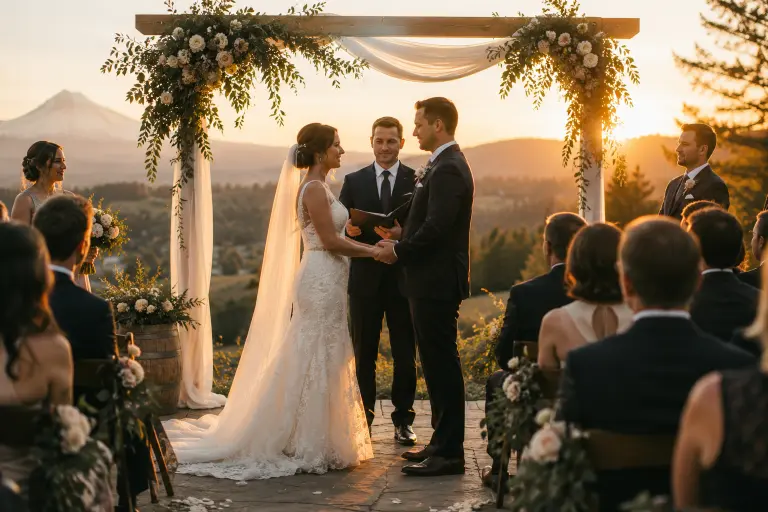
An unplugged ceremony asks guests to put their phones and cameras away during key moments so your professional vendors can do their work without interference. It also keeps your guests emotionally present in the moment with you.
Why Should You Consider an Unplugged Ceremony?
Unplugged ceremonies improve both photo and video quality dramatically. No raised phones in the aisle blocking your videographer’s shot. No flash interference during candlelit moments. No screens distracting from the emotional weight of your vows. Guests are more engaged, the room feels more intentional, and your wedding film captures the day exactly as you want to remember it. For couples whose loved ones cannot attend, our wedding live streaming service allows remote guests to be present without anyone in the room filming the ceremony.
Why Should You Rehearse Your Wedding Ceremony?
A ceremony rehearsal is more than tradition. It is essential planning that gives your entire team confidence on the wedding day.
What Should You Practice During Your Ceremony Rehearsal?
- Walk through the processional and recessional with the wedding party
- Practice timing with music cues
- Confirm where readers, officiant, and couple will stand throughout the ceremony
- Test audio levels with microphones for the officiant and couple
- Review camera positions and blocking with your photo and video team
A solid rehearsal reduces stress and lets every vendor, including your videographer, plan how to capture the day with intention. For more detail on how venue layout affects ceremony filming, our wedding videography services page explains how we adapt to every kind of space.
What Wedding Ceremony Essentials Do Couples Often Forget?
A few small details make a big difference but often slip through the cracks of wedding planning.
Ceremony Programs
Programs help guests follow the flow of your ceremony, especially when you include personalized readings, traditions, or rituals. They also become a beautiful keepsake.
Signage for Guest Direction
A welcome sign and directional signage help guests settle in quickly and comfortably, reducing confusion and helping everyone find their seats with ease.
Microphone Backup
Always confirm that your audio vendor has extra microphones, fresh batteries, and tested connections. Outdoor wind or unexpected technical issues can disrupt vows quickly, so backups protect your most important moments.
Weather Plans for Outdoor Ceremonies
Outdoor ceremonies need clear inclement weather plans. Think through wet ground protection, shade options, heaters for cold weather, and tent backups if rain is in the forecast. Pacific Northwest weather changes fast, and a flexible plan keeps your day stress free.
How Do You Stay Present on Your Wedding Day?
Amid all the planning, vendor coordination, and timeline management, do not forget why you are doing all of this. Your ceremony is the moment you make a lifelong commitment in front of the people you love most.
Pause before you walk down the aisle. Breathe before you say your vows. Look into each other’s eyes during the ring exchange. Your wedding ceremony is fleeting. Every detail you plan supports that single emotional truth, and when you stay present in the moment, your wedding film captures something money cannot manufacture, genuine emotion.
Why Trust Portland Event Films With Your Wedding Ceremony?
At Portland Event Films, we do not just film weddings. We help you plan your ceremony through the lens of what truly matters. After hundreds of weddings filmed across Oregon and Washington, we know how to align your vision with the practical decisions that protect your wedding film, your audio, your lighting, and your emotional moments.
Our approach blends documentary instincts with cinematic craftsmanship, and we work closely with your DJ, photographer, planner, and officiant to make sure your ceremony flows beautifully on the day and translates beautifully on film. Browse our photo gallery for more examples of how we approach Pacific Northwest weddings.
A Well Planned Wedding Ceremony Becomes a Story Worth Reliving
Your wedding ceremony is the emotional center of your wedding day. When the vision is clear, the timing is intentional, the music is purposeful, and your vendors are coordinated, your ceremony stops being a checklist and starts being a story. A story your guests feel. A story your film captures. A story you will return to every anniversary, every milestone, every quiet evening when you want to remember how it all began. Planning with intention is what makes that story possible, and it is what makes your wedding film something you will cherish for the rest of your lives.
Book Portland Event Films to Capture Your Wedding Ceremony
Your ceremony deserves a videography team that understands more than just filming. It deserves a team that understands timing, audio, lighting, and the emotional weight of every moment. Portland Event Films brings documentary instincts, cinematic editing, and years of coordination experience with DJs, photographers, and planners across Oregon and Washington.
Ready to plan your dream wedding ceremony? Explore our wedding videography packages to find coverage that suits your day. Planning a smaller intimate celebration? Visit our elopement videography page. Hosting a multicultural ceremony? Discover our Indian wedding videography services. Want loved ones to share your ceremony remotely? Check out our wedding live streaming options. Prefer a documentary feel? Learn about our wedding documentary film approach. See more of our work in the video gallery, then contact Portland Event Films today to begin planning your story.
Frequently Asked Questions
1. How long should a wedding ceremony last?
Most non religious wedding ceremonies run between twenty and twenty five minutes. Religious or cultural ceremonies may last longer based on traditions and rituals included.
2. What is the standard order of a wedding ceremony?
A classic ceremony order includes the prelude, processional, welcome, readings or rituals, vows, ring exchange, pronouncement and first kiss, and recessional.
3. Should I write my own wedding vows?
Personal vows make your ceremony more meaningful and become an emotional anchor in your wedding film. Many couples mix personalized vows with traditional ones for balance.
4. What is an unplugged wedding ceremony?
An unplugged ceremony asks guests to put away phones and cameras during key moments. It improves photo and video quality and keeps everyone emotionally present.
5. How do I make sure my vows are clear on the wedding video?
Speak slowly and clearly, and share a printed copy of your vows with your videographer ahead of time. Professional microphones make the biggest difference in audio quality.
6. Do we really need a wedding rehearsal?
Yes. A rehearsal helps your wedding party, officiant, and vendors understand timing, blocking, and audio so the actual ceremony flows smoothly.
7. Does Portland Event Films coordinate with other wedding vendors?
Yes. We work closely with DJs, photographers, planners, and officiants to ensure smooth ceremony execution and beautiful final wedding films.
Key Takeaways
- Start with a clear ceremony vision and tone before diving into details.
- A standard wedding ceremony runs about twenty to twenty five minutes for non religious services.
- Seating layout, music cues, and vendor coordination all directly impact how your ceremony film turns out.
- Personal vows are the emotional centerpiece, so prioritize clean audio and clear delivery.
- An unplugged ceremony improves both photo and video quality while keeping guests emotionally present.
- Always rehearse, plan for weather, and confirm microphone and lighting backups.
- Portland Event Films brings documentary instincts and cinematic craftsmanship to wedding ceremonies across Oregon and Washington.